Procurement services for yarns and fibers
LoomVista Procurement supplier and sample handoffs for yarn briefs
- Brief
- Swatch or cone
- Bulk lot
This page explains how LoomVista Procurement coordinates comparable mill replies. It does not claim mill ownership, authorization, inventory or a measured search landing for the home-page brand query.
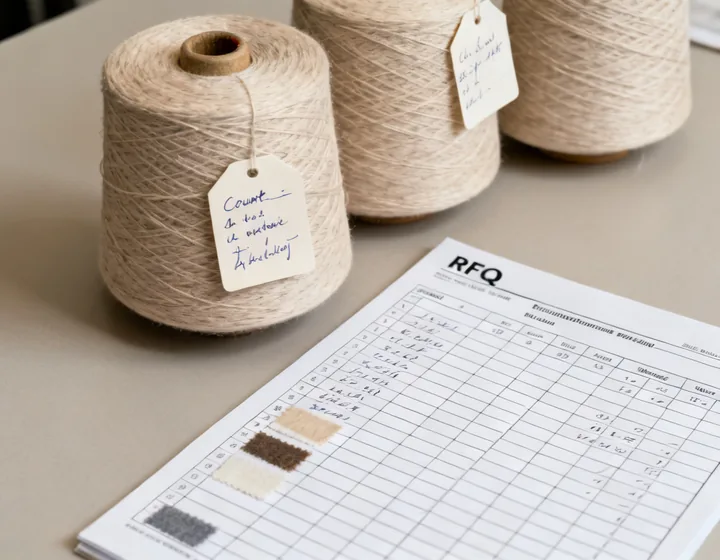
Supplier and sample handoffs
Each mill quote should answer the same yarn fields. If a mill offers a different count, ply or package, the exception is written before price is treated as comparable.
-
Define deliverables and the approval sequence
Buyers preparing a knitting, sewing or industrial filament order need to state whether the next deliverable is a fiber tuft, a lab dip on package-dyed yarn, a sewing trial cone or a pre-production lot. Those stages are not interchangeable. A retained cone can screen hand and appearance, yet it does not automatically represent the bulk dye lot or the moisture regain that will appear on the commercial invoice. Write who approves each stage, what deviation is allowed, and which documents travel with the sample. LoomVista Procurement records the sequence so mills quote against one calendar of decisions rather than against informal chat notes.
-
Record supplier exceptions and sample revisions
When a mill cannot match the requested count system, linear density or luster, the reply should mark the substitute instead of silently renaming it as the original article. Spun yarn substitutions often change hairiness and pilling behavior; filament substitutions often change luster and snagging. Ask the mill to restate composition, ply, twist direction if relevant, package build and minimum lot. Keep revision numbers on sample tags. A second cone that arrives without a revision code cannot be treated as the same evidence trail. Price is reviewed only after the exception list is complete, because a cheaper kilogram can hide a different net cone weight or a different allowed join frequency.
-
Agree inspection responsibility and export handover
Inspection ownership must name the party, the location and the sampling rule. Yarn and fiber lots are often checked for count, moisture, appearance and package damage; those checks still need an agreed method and specimen condition. Export handover should list Incoterms language the buyer actually wants, the US destination, and which documents the mill will issue for the exact article. Certificates remain mill or laboratory documents tied to a batch. This sourcing desk does not publish those papers as its own credentials and does not promise a transit time that a carrier has not confirmed.
Prepare the next sourcing decision
Share the yarn or fiber sample identity, the open specification fields, quantity with unit and the US destination so mill quotations can be lined up on one sheet.