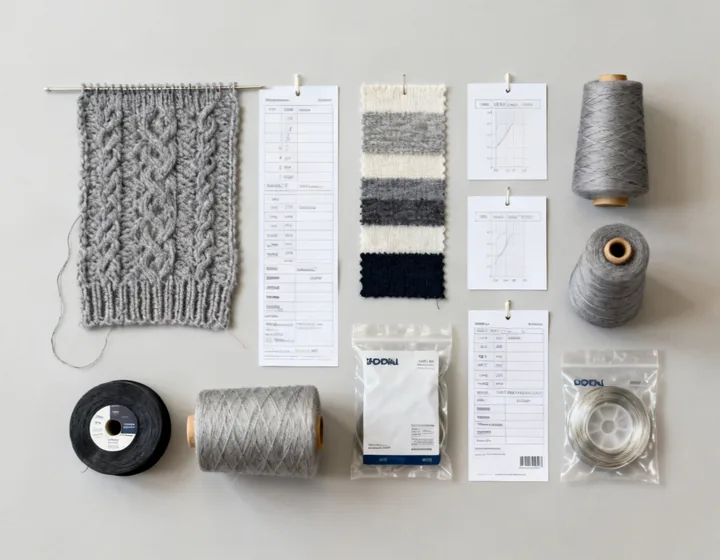
FREE sourcing support and up to 3% coordination support on qualified yarn and fiber briefs. Eligibility applies to qualified business buyers and is confirmed after we review your product, quantity, destination, and sourcing requirements.

Independent textile specification and sourcing support. A buyer brief, comparable material options, clear supplier responsibilities. Independent sourcing partner, not a mill website.

Material applications

LoomVista Procurement application requirements for yarns and fibers

Knitting, sewing and industrial yarn end-use board

Application requirements

End use and exposure

Yarn that will be knitted into next-to-skin apparel faces different abrasion, pilling and moisture conditions than sewing thread in outdoor equipment or filament used in industrial conversion. Write the finished product, contact conditions, washing or weathering if known, and whether the yarn will be dyed, waxed or twisted further. Do not copy an apparel-fabric or upholstery-fabric catalog into this site: the purchasable family here is yarns, fibers and threads. If the end use is still undecided, say so, because mills cannot honestly lock luster or finish against an unnamed garment. Exposure notes should stay measurable: temperature, UV, chemicals or seam stress, each marked as requested, tolerated or unknown.

Test method and sample

Public ASTM or AATCC listings can help name a method family, yet a method title is not a result. Record the edition year printed on the mill sheet, conditioning, specimen and laboratory if a buyer wants a number. A 2019 brochure title is not the same evidence as a 2024 lot report. Count, breaking force, evenness or colorfastness of package-dyed yarn each need their own agreed basis. Sample condition matters: a steamed knitting yarn, a lubricated sewing thread and a dry filament bobbin are not the same object. If no test is required at RFQ, write that testing will be decided after shortlisting so mills do not invent a pass/fail poster. Third-party reports stay tied to the quoted article and lot.

Quantity, finish, package

Yarn quantity is usually kilograms, metric tons, cones or bales, not fabric yards. Usable width is rarely the right field unless the buyer is actually purchasing fabric; for this family, package build, cone density and lot size replace width. Finish may mean spin finish, lubrication, wax or dye stage. Match those fields to the process: knitting wants consistent cone unwind, sewing wants ticket and lubrication, industrial conversion wants linear density stability. State destination in the United States and whether split lots are allowed. A small trial cone is not a bulk bale, and mixing them on one price line hides the true comparison. Lowest unit price is not comparable delivered scope: freight, sampling charges, moisture basis and allowed joins still sit outside a headline kilogram figure.

Turn the application into a purchase brief

Name the end use, the yarn or fiber form, quantity unit and the documents you want mills to attach. We will request comparable factory quotations after those fields are readable.